
8935866
Description

Flashcards by Victoria Wright, updated more than 1 year ago

|
Created by Victoria Wright
over 8 years ago
|
|
| Question | Answer |
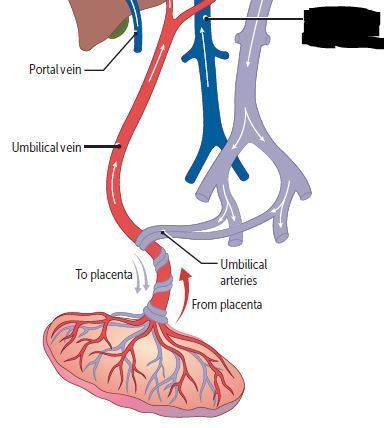
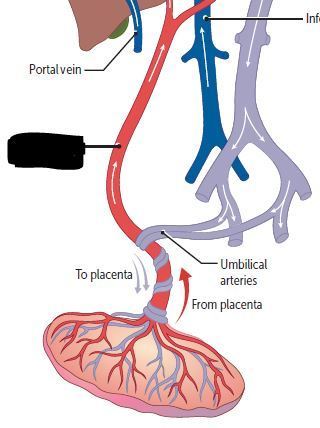
| Blood in umbilical vein has a PO2 of about what? | Blood in umbilical vein has a Po2 of ≈ 30 mm Hg |
| Blood in umbilical vein is ≈ 80% saturated with what? | O2 |
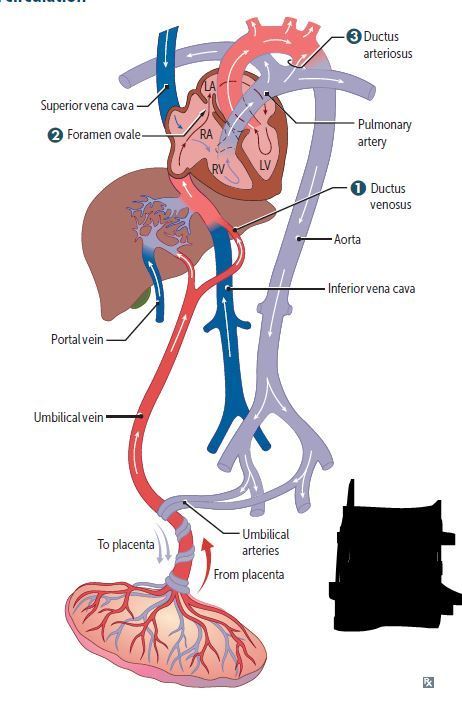
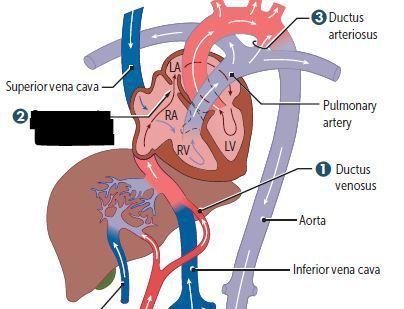
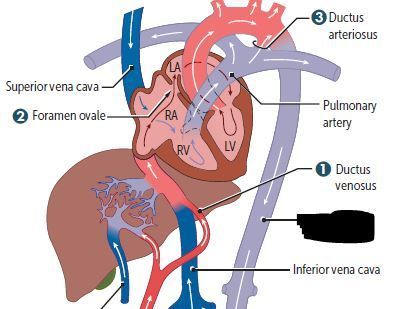
| What are the 3 important shunts in fetal circulation? | Ductus venosus Ductus arteriosus Foramen ovale |
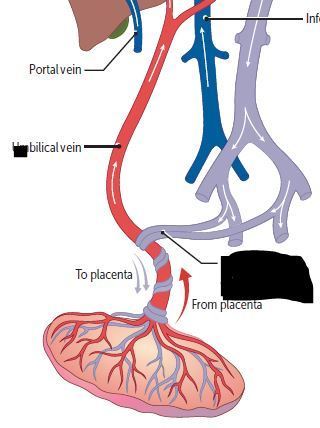
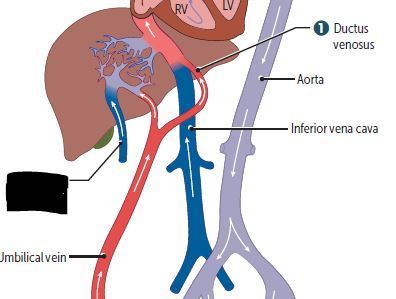
| Blood entering fetus through the umbilical vein is conducted via the what? | Ductus Venosus |
| Blood entering fetus through the umbilical vein is conducted via the ductus venosus into the what? | IVC |
| Blood entering fetus through the umbilical vein is conducted via the ductus venosus into the IVC, bypassing what? | Bypassing hepatic circulation. |
| Most of the highly Oxygenated blood reaching the heart via the IVC is directed through the what? | Foramen ovale |
| Most of what blood reaching the heart via the IVC is directed through the Foramen Ovale? | Highly Oxygenated Blood |
| Most of the highly Oxygenated blood reaching the heart via the IVC is directed through the foramen Ovale and pumped into the what? | Aorta to supply the head and body |
| Most of the highly Oxygenated blood reaching the heart via the IVC is directed through the foramen Ovale and pumped into the aorta to supply what? | The head and body. |
| Deoxygenated blood from the SVC passes through the RA, to the RV, to the main pulmonary artery, to the Ductus arteriosus, to the what? | Descending aorta |
| Deoxygenated blood from the SVC passes through the what (?), to the RV, to the main pulmonary artery, to the Ductus arteriosus, to the Descending aorta? | Deoxygenated blood from the SVC passes through the RA, to the RV, to the main pulmonary artery, to the Ductus arteriosus, to the descending aorta. |
| What type of blood from the SVC passes through the RA, to the RV, to the main pulmonary artery, to the Ductus arteriosus, to the descending aorta? | Deoxygenated Blood |
| Deoxygenated blood from where passes through the RA, to the RV, to the main pulmonary artery, to the Ductus arteriosus, to the descending aorta? | SVC |
| Shunt is due to what? | Deoxygenated blood from SVC passes through the RA, to the RV, to the main pulmonary artery, to the Ductus arteriosus, to the descending aorta; shunt is due to high fetal pulmonary artery resistance (due partly to low O2 tension). |
| Deoxygenated blood from SVC passes through what? | Deoxygenated blood from SVC passes through the RA, to the RV, to the main pulmonary artery, to the Ductus arteriosus, to the descending aorta; shunt is due to high fetal pulmonary artery resistance (due partly to low O2 tension). |
| At birth, infant takes a breath. What does this lead to? | Decreased resistance in pulmonary vasculature leads to increased left atrial pressure vs right atrial pressure; foramen ovale closes (now called fossa ovalis); increase in O2 (from respiration) and decrease in prostaglandins (from placental separation) leads to closure of ductus arteriosus. |
| At birth, infant takes a breath. What leads to increased left atrial pressure vs right atrial pressure? | Decreased resistance in pulmonary vasculature leads to increased left atrial pressure vs right atrial pressure. |
| At birth, infant takes a breath. What does Decreased resistance in pulmonary vasculature leads to? | Increased left atrial pressure vs right atrial pressure |
| At birth, infant takes a breath. What happens to the foramen ovale? | Foramen ovale closes (now called fossa ovalis). |
| At birth, infant takes a breath. What happens to O2? | Increase in O2 from respiration |
| At birth, infant takes a breath. What happens to prostaglandins? | Decrease in prostaglandins (from placental separation) |
| At birth, infant takes a breath. Decrease in prostaglandins leads to what? | Closure of ductus arteriosus. |
| What helps close PDA? Leading to what? | Indomethacin helps close PDA leads to ligamentum arteriosum (remnant of ductus arteriosus). |
| Indomethacin helps close what? | PDA leading to igamentum arteriosum (remnant of ductus arteriosus). |
|
Is the O2 in the dark red area high, moderate, low, or very low?
Image:
Capture (image/jpeg)
|
High |
|
Is the O2 in the light pink area high, moderate, low, or very low?
Image:
Capture (image/jpeg)
|
Moderate |
|
Is the O2 in the light blue area high, moderate, low, or very low?
Image:
Capture (image/jpeg)
|
Low |
|
Is the O2 in the dark blue area high, moderate, low, or very low?
Image:
Capture (image/jpeg)
|
Very low |
|
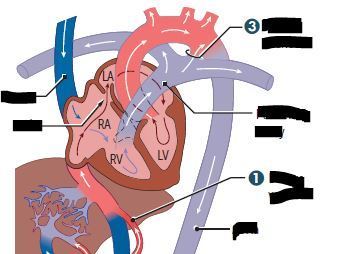
What is 3 pointing at?
Image:
Capture (image/jpeg)
|
Ductus arteriosus |
|
What is 1 pointing at?
Image:
Capture (image/jpeg)
|
Ductus venosus |
|
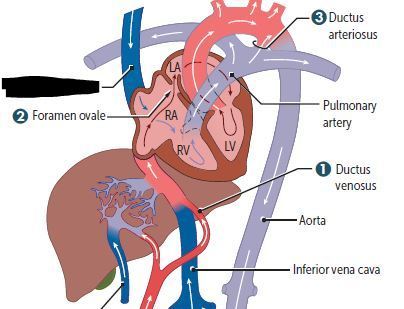
Image:
Capture (image/jpeg)
|
Superior vena cava |
|
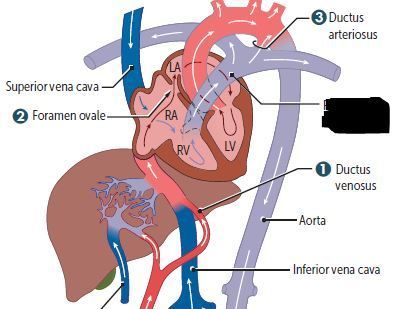
Image:
Capture (image/jpeg)
|
Pulmonary artery |
|
Image:
Capture (image/jpeg)
|
Foramen ovale |
|
Image:
Capture (image/jpeg)
|
Aorta |
|
Image:
Capture (image/jpeg)
|
Inferior vena cava |
|
Image:
Capture (image/jpeg)
|
Umbilical vein |
|
Image:
Capture (image/jpeg)
|
Umbilical arteries |
|
Image:
Capture (image/jpeg)
|
Portal vein |
| What keep PDA open? | Prostaglandins E1 and E2 kEEp PDA open. |
| Fetal-postnatal derivatives AllaNtois ---> urachus | MediaN umbilical ligament |
| What is Urachus part of? | Urachus is part of allantoic duct between bladder and umbilicus. |
| Fetal-postnatal derivatives Ductus arteriosus | Ligamentum arteriosum |
| Fetal-postnatal derivatives Ductus venosus | Ligamentum venosum |
| Fetal-postnatal derivatives Foramen ovale | Fossa ovalis |
| Fetal-postnatal derivatives Notochord | Nucleus pulposus |
| Fetal-postnatal derivatives UmbiLical arteries | MediaL umbilical ligaments |
| Fetal-postnatal derivatives Umbilical vein | Ligamentum teres hepatis (round ligament) Contained in falciform ligament. |
Want to create your own Flashcards for free with GoConqr? Learn more.